
Main CPGW Record
Surname: HARKER
Forename(s): Romille
Place of Birth: Eccleshall, Staffordshire
Service No: 23708
Rank: Sergeant
Regiment / Corps / Service: King’s (Liverpool Regiment)
Battalion / Unit: 'B' Coy 1st Battalion
Division: 2nd Division
Age: 36
Date of Death: 1915-09-25
Awards: ---
CWGC Grave / Memorial Reference: Panel 27 to 30.
CWGC Cemetery: ---
CWGC Memorial: LOOS MEMORIAL
Non-CWGC Burial: ---
Local War Memorial: LINTON-IN-CRAVEN, YORKSHIRE
Additional Information:
Romille Harker was the son of Bailey John and Amy Harker, née Smith. Bailey was born at Grassington, Yorkshire and Amy at Old Park, Dawley, Shropshire. Bailey was a minister of the Congregational Church. He wrote guide books in an effort to bring visitors to the Grassington area.
1881 Banff, Banffshire Census: 12, North Castle Street - Romillie Harker, aged 1 year, born England, son of Rev. Bailey J. and Amy Harker.
1891 Bolton, Lancashire Census: 1, Ducie Avenue - Romillie Harker, aged 11 years, born Ecclehall, Staffordshire, son of Bailey J. and Amy Harker.
1901 Bolton, Lancashire Census: 294, Deane Church Lane - Romill[y?] Harker, aged 21 years, born Eccleshall, Staffordshire, son of Bailey J. and Amy Harker.
Romille was married to Alice Hargreaves in 1908. Alice married Joseph McWilliam in 1918.
1911 Bolton, Lancashire Census: 37, Lyndhurst Street - Romillé Harker, aged 31 years, born Eccleshall, Staffordshire, husband of Alice Harker.
British Army WW1 Medal Rolls Index Cards: Sjt Romille Harker, 23708, L'pool R. Theatre of War: (1) France. Qualifying date [for 1914-15 Star]: 31.5.15. Deceased.
British Army WW1 Medal and Award Rolls: Sgt Romille Harker, 23708, 1st KLR. Deceased.
Army Registers of Soldiers' Effects: Sgt Romille Harker, 23708, 1st Bn Liverpool Regt. Date and Place of Death: 25.9.15. Death Presumed. France K. in A. To whom Authorised/Amount Authorised: Widow - Alice. £1 6s. 7d. War Gratuity: Widow Alice McWilliam. £6 0s. 0d.
UK, WW1 Pension Ledgers and Index Cards, 1914-1923: Sergt Romillé Harker, 3/23708, King's Liverpool. Date of death 25.9.15. Name(s) on card(s): Widow: Mrs Alice Harker, born 7.1.89. Address: 55, Church Bank, Bolton.
Romille was killed in action during the Battle of Loos, 25 September-8 October.
Romille is commemorated by Bolton Remembers: an online reference documenting Bolton's war dead (boltonremembers.org).
The 1939 Register shows that Alice and her husband Joseph were living at 15, Levens Grove, Blackpool, Lancashire. Alice died in 1942.
Photograph courtesy of Upper Wharfedale Museum, Grassington.
A short biography of Romille is included in: ‘Swaledale & Wharfedale Remembered – Aspects of Dales’ life through peace and war’ by Keith Taylor (2006).
Data Source: Craven’s Part in the Great War - original CPGW book entry
View Entry in CPGW BookEntry in West Yorkshire Pioneer Illustrated War Record:
HARKER, Sergeant R., [Grassington], aged 36, 1st King’s Liverpools, killed in action in France on Sept. 26, 1915.
---
Click the thumbnail below to view a larger image.
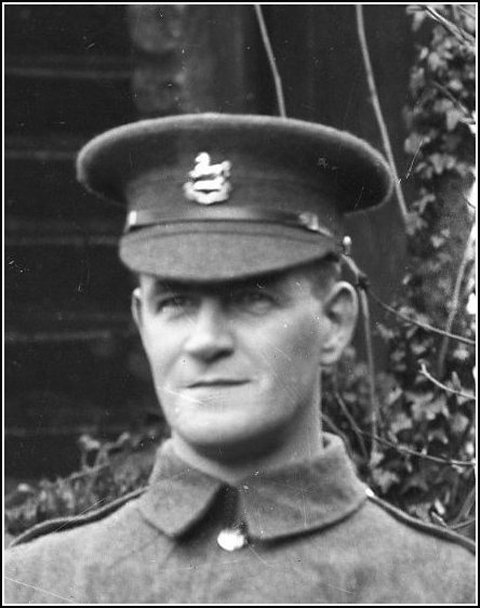
Sergeant Romille HARKER
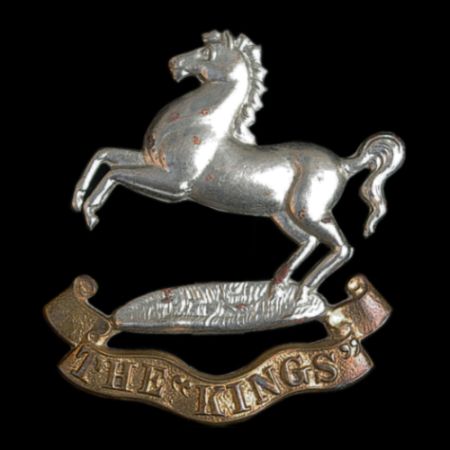
Regiment / Corps / Service Badge: King’s (Liverpool Regiment)

Divisional Sign / Service Insignia: 2nd Division
View Additional Image(s)
Additional Photo(s) For Soldier Records
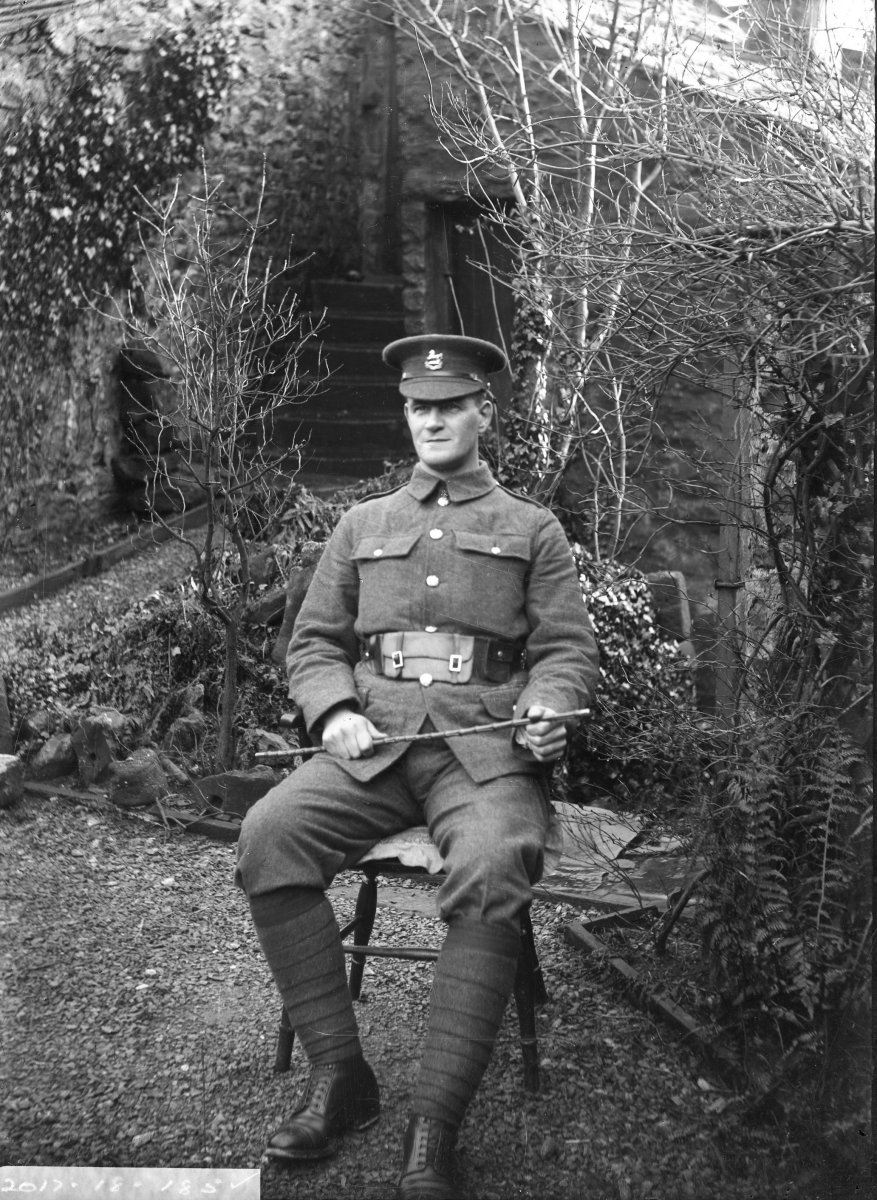
Sergeant Romille Harker
Courtesy of Upper Wharfedale Museum, Grassington
View Craven Herald Articles
View Craven Herald Articles

11 December 1914
GRASSINGTON – 7,000 Miles to the Front
Mr. Romillie Harker, third son of the Rev. Bailey J. Harker, of Grassington, has arrived in England from the Argentine, after a voyage of over six weeks, the steamship being much delayed by having to dodge the German cruisers. Mr. Harker paid a short visit last week-end to his parents, and left on Sunday evening for the King’s Liverpool Regiment at Seaforth Barracks. There are many wishes for his safe return from the Front, to which he is expected to go almost immediately.
09 July 1915
GRASSINGTON – Letters from Sergt. Romille Harker
Two most interesting and descriptive letters have been received from Sergt. Romille Harker (son of the Rev. Bailey J. Harker, of Grassington), who went to the front on June lst. With that dated June 10th, 1915, was a pressed crimson poppy flower from the trenches. He is in the B Company of the lst Battalion the King's Liverpool Regiment. In the letter he says:– “Since I wrote last we have had another spell of four days in the firing line; my platoon has no lieutenant over it so I am in complete charge, and continually employed with one duty or another. We (my platoon) came out short of four men wounded - head, arm and hand - but I myself was again among the fortunate ones.
“You may be curious to know my feelings when under fire, but really I have experienced no marked change when in action, except that it be I feel more satisfied with myself, and become aware of a certain exhilaration such as I have felt in a football or cricket match.”
The second letter is dated Friday, 2/7/15, but was not finished till the following day. In this, Sergt. Harker continues:– “We finished our last spell in the trenches (4 days in the firing line) on Sunday morning, and have since had 4 days in billet in a small town some four miles away from here, for we returned to almost the same position yesterday morning (Thursday). Our last spell cost us about 25 casualties in the battalion, these being the victims of mine explosions and shell fire principally. On one occasion a ‘Jack Johnson’ burst in the midst of a ration party of 14, only three being left without a souvenir of some kind, and one of the men (Walsh) had his head blown completely away. My platoon came out without anything more than a bullet graze. Pte. McGoverny having two neat little holes through the coat sleeve just about the shoulder.
“I saw a copy of the ‘Craven Herald’ of last week. Pte. Maudsley, of Giggleswick origin (he attended the Grammar School there) received it from home.”
13 August 1915
GRASSINGTON – Serg. Romille Harker
Those who read ‘T.P.’s Weekly’ for July 31st, would find that Corporal Joseph H. Tombs, who won the Victoria Cross on June 16th, is in Serg. Harker’s Platoon. Letters continue being received by the Rev. B.J. Harker, of Moorside, Grassington, father of the latter, which bear testimony to the valour and grit displayed by all our soldiers in the firing line.
08 October 1915
CRAVEN AND THE WAR – DEATH OF SERGT. R. HARKER, GRASSINGTON
We regret to learn that news has been received of the death, in action on September 26th, of Sergt. R. Harker, son of the Rev. Bailey J. Harker, of Grassington. No official confirmation had up to yesterday morning been sent to the bereaved parents, with whom deep sympathy is felt.
15 October 1915
HARKER – Killed in action in France on September 26th, 1915, aged 36 years, Sergt. Romille Harker, of the 1st King’s Liverpool Regiment, beloved son of Mrs. and Rev. Bailey J. Harker, of Moorside, Grassington. Deeply regretted.
“He was the soul of honour, magnanimous and brave.”
15 October 1915
SERGEANT ROMILLE HARKER KILLED IN ACTION
Much sympathy will be extended to the Rev. Bailey J. Harker of Grassington, upon the receipt of official information received last Saturday of the death of his eldest son, Sergt. Romille Harker, of the 1st King’s Liverpool Regiment, who was killed during the current heavy fighting in France.
The sad intelligence reached the parents unofficially on Thursday last week. It was contained in a letter written by a comrade of Sergt. Harker to relative Pte. Hilton. The first communication briefly stated that “Romille Harker is killed,” Further details as to how he met his death were forthcoming in a subsequent letter.
From this it appeared that the unfortunate young fellow was first wounded in the leg and was heard to call for the stretcher-bearers. Immediately afterwards he was hit in the head, and as he fell received three more shots in the body. The writer of this letter, in a further communication to Pte. Neville Harker, of Bolton, refers to Sergt. Harker as having “died game,” and adds that he was buried in accordance to the rites of his Church.
Sergt. Harker was born at Eccleshall, Staffordshire, 36 years ago, and was educated at Caterham Congregational College. For 16 years he was employed as clerk and cashier at a factory in Bolton, Lancashire, but about three years ago obtained a position as foreign correspondent to the Central Argentine Railway at Rosarlo de Santa Fe.
While at Bolton he was a member of the Territorial Battalion, and on the declaration of war was one of about half a dozen employees of the Central Argentine Railway who answered the call – since then about 300 have joined the Colours. He made the 7,606 miles voyage to England in a tramp steamer and was on the way five weeks, the greatest vigilance having to be exercised in avoiding the German commerce raiders, who were at that time in the midst of their piratical campaign.
Sergt. Harker enlisted as a private in the lst King’s Liverpool Regiment and was soon promoted to the rank of sergeant. He might have remained in this country with the rank of Quarter-Master-Sergeant, and prospects of still further promotion, but he preferred to remain with this regiment and left England for France on his birthday, June 1st. Since that time he has been more or less in the firing line, and was appointed sergeant of the bomb throwers in ‘B’ Company.
Deceased was a young man of modest disposition, but possessed a charming personality and considerable intellectual attainment. He was an artist, a literary critic, and wrote much poetry, while he was a keen naturalist. He was a frequent visitor to Grassington when resident in this country, and was very popular in the neighbourhood.
Since receiving news of the sad occurrence, the Rev. B. J. Harker has found the following verses, written by the deceased on the fly leaf of a book, which in present circumstances are singularly appropriate:–
Mid the busy toll and rush.
Some poor souls are sighing;
Here amidst a holy hush
Lies a good man dying.
Why those useless, welling tears?
Why that trembling finger?
Death for good men has no fears
Save for those who linger.
Selfish still we 'gin to mourn,
For our circle broken;
Garb of grief is meekly worn,
Or some death-like token.
But our brother hears the songs
Happier saints are singing;
To that home that knows no wrongs
His free soul is winging.
Constant for his Master here,
In his course diurnal;
Christ will lead him gently there
Into peace eternal.
13 October 1916
HARKER – October 5th, 1916, at ‘Moorside,’ Grassington, Rev. Bailey J. Harker, in his 74th year.
04 October 1918
HARKER – In affectionate remembrance of the Rev. Bailey J. Harker, of Grassington, who departed this life October 5th, 1916, and of Romille, his third son, killed in action September 25th, 1915, at the Battle of Loos.
Moorside, Grassington.
10 October 1919
HARKER – In loving memory of the Rev. Bailey J. Harker, who passed away Oct. 6th, 1916; also of Romille, his third son, who was killed in action September 25th, 1915.
“Resting in Peace.”
Moorside, Grassington.
08 October 1920
HARKER – In affectionate remembrance of the Rev. Bailey John Harker, of Moorside, Grassington, who passed away October 5th, 1916; also of Romille, third son of the above, who was killed in action at the Battle of Loos, September 26th, 1915.
View West Yorkshire Pioneer Articles
View West Yorkshire Pioneer Articles

11 December 1914
GRASSINGTON – 7,000 MILES TO THE FRONT
Mr. Romillie Harker, third son of Rev. Bailey J. Harker of Grassington, has arrived in England from the Argentine, after a perilous voyage of over six weeks, the steamship being much delayed by having to dodge the German cruisers. Mr. Harker paid a short visit last weekend to his parents, and left on Sunday evening for the King’s Liverpool Regiment at Seaforth Barracks. There are many wishes for his safe return from the Front, to which he is expected to go almost immediately.
09 July 1915
LETTERS FROM SERGEANT ROMILLE HARKER
Two most interesting descriptive letters have been received from Sergt. Romille Harker (son of the Rev. Bailey J. Harker of Grassington), who went to the Front on June 1st. With that dated June 19th 1915 was a pressed crimson poppy flower from the trenches. He is in the ‘B’ Company of the 1st Battalion of the King’s Liverpool Regiment. In this letter he says:– “Since I wrote last we have had another spell of 4 days in the firing line, my platoon has no Lieutenant over it so I am in complete charge and continually employed with one duty or another. We (my platoon) came out short of 4 men wounded – head, arm and hand – but I myself was again curious to know my feelings when under fire, but really I have experienced no marked change when in action, except that it be I feel more satisfied with myself, and become aware of a certain exhilaration, such as I have felt in football or cricket matches.”
In the second letter, Sergt. Harker says:– “We finished our last spell in the trenches (4 days in the firing line) on Sunday morning and have since had 4 days in billet in a small town some four miles away from here, for we returned to almost the same position yesterday morning. Our last spell cost us about 25 casualties in the battalion, those being the victims of mine explosions and shellfire principally. On one occasion a ‘Jack Johnson’ burst in the midst of a ration party of 14, only three being left without a souvenir of some kind, and one of the men (Walsh) had his head blown completely away. My own platoon came out without anything more than a bullet graze. Private McGoverny having two neat little holes through the coat sleeve, just about the shoulder.”
13 August 1915
GRASSINGTON
ERGEANT ROMILLE HARKER – Those who read ‘T.P.’s Weekly’ for July 31st, would find that Corporal Joseph H. Tombe, who won the Victoria Cross on June 16th, is in Sergeant Harker’s platoon. Letters continue being received by the Rev. B.J. Harker, of Moorside, Grassington, father of the latter, which bear testimony to the valour and grit displayed by all our soldiers in the firing line.
08 October 1915
SERGT. HARKER OF GRASSINGTON KILLED
News has been received by Rev. B.J. Harker of Grassington that his son, Sergt. R. Harker, had been killed in action in France on September 26th. Official news has not yet been received. We deeply sympathise with the bereaved rev. gentleman if the news proves to be authenticated officially.
15 October 1915
THE LATE SERGT. R. HARKER
Confirmatory News Received
Last week we reported that Rev. Bailey J. Harker, Congregational minister of Grassington, had received news from an unofficial source that his son, Sergt. R. Harker, of the 1st King’s Liverpools, had been killed in action in France. This week Mr. Harker has received confirmation of the sad news from a fellow sergeant in the battalion who saw him killed. It appears that Sergt. Harker belonged to the bomb-throwers and it was while leading these that he was shot in the leg. Before assistance could be got to him he was shot in the head and thrice in the body.
Sergt. Harker, who was 36 years of age, was a promising young man. He had great abilities as a writer and a linguist, and some of his poetry showed real merit. He was born in Eccleshall in Staffordshire, and was educated at the Congregational College at Caterham in Surrey. For 16 years he occupied a responsible position as bookkeeper and cashier at a mill in Bolton. About four years ago he took up a position as foreign correspondent clerk in the offices of the Argentine Railway at Rosario-de-Sante Fe. When war broke out he and five others in the works returned to England, being followed later by 300 more. It took five weeks for the ship to get to England, as the Germans had not then been driven off the seas. Arriving in England he joined the King’s Liverpools as a private, and his previous experience in the Territorial Force, in which he was a sergeant, stood him in good stead. He had an opportunity of remaining at home when his battalion was moved to the Front last June, but he preferred to take the more dangerous post.
Rev. Bailey J. Harker has received numbers of letters of sympathy in this great loss.
24 December 1915
CRAVEN’S ROLL OF HONOUR – GRASSINGTON
Sergt. R. Harker, 1st King’s Liverpools, of Grassington, killed in action in France on September 26th. Thirty-six years of age.
04 October 1918
In affectionate remembrance of Rev. Bailey J. Harker, of Grassington, who departed this life, Oct. 5th, 1916, and of Romillé, his third son, killed in action Sept. 25th, 1915, at the ‘Battle of Loos.’
Moorside, Grassington, Oct. 2, 1918.
Comment on this Soldier Record
You can leave comments on this soldier record. Please note all comments will be manually approved before they appear on the website.


No comments yet.